Why Can Some People Touch Their Tongue to Their Nose?
Some people can touch their tongue to their nose because of a combination of tongue length, tongue flexibility, and facial shape. Doctors call the ability Gorlin’s sign. Roughly 1 in …
Now It All Makes Sense

Some people can touch their tongue to their nose because of a combination of tongue length, tongue flexibility, and facial shape. Doctors call the ability Gorlin’s sign. Roughly 1 in …

Some people are ambidextrous because their brains develop with less of a left-right split in hand control, and genes appear to play a part. A large genetic study found seven …

Some people are left-handed because of differences in early brain development that are partly shaped by genes. Twin studies suggest about 25 percent of handedness is inherited, and a giant …

Some people have extra-long second toes because of the way the bones in the front of their foot develop, and that pattern is inherited. When the second toe extends past …
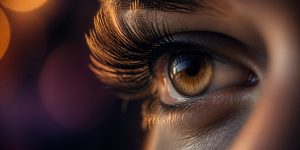
Some people have long, thick eyelashes because their lash follicles stay in the growth phase longer and produce more or sturdier hairs, and those traits are largely inherited. Hundreds of …

Some people have a gap between their front teeth because their teeth are small relative to their jaw, and both traits are strongly inherited. The gap, called a diastema, can …

Some people have naturally dark under-eye circles because the trait is mostly inherited. The skin under the eyes is very thin, so blood vessels show through, and some people also …

Anesthesia affects people differently because your response depends on your age, health, medications, and habits, and also on inherited traits. Natural redheads, for example, tend to need more anesthetic gas, …

Some people have chronically low iron because they lose iron through bleeding, take in too little, or absorb it poorly. Genes matter here too. Variants in genes such as TMPRSS6 …
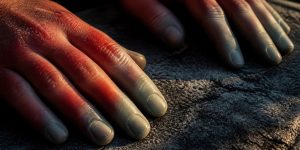
Some people get painfully cold hands and feet because of Raynaud’s phenomenon, a condition in which small blood vessels in the fingers and toes overreact to cold or stress. The …