Chronotype, meaning whether someone naturally leans toward mornings or nights, usually gets discussed purely in terms of sleep timing: when you fall asleep, when you wake up, when you feel most alert. But there’s a separate, less-talked-about layer to this. Some people aren’t just awake and functional in the morning, they’re genuinely upbeat, warm, and easygoing before 9 a.m., while others can be fully rested and still radiate a distinctly unfriendly energy until their second cup of coffee kicks in.
This isn’t purely about sleep schedule. It touches on how mood itself fluctuates across the day, and that daily mood rhythm has its own biological and genetic underpinnings.
What Causes Morning Mood to Vary
Mood follows its own daily rhythm, closely tied to but not entirely identical to the circadian rhythm that governs sleep and wake timing. Hormones like cortisol, which naturally rises sharply in the first hour or so after waking as part of what’s called the cortisol awakening response, play a role in shaping early-morning emotional state, alongside neurotransmitter systems including serotonin and dopamine, both of which show measurable daily fluctuation tied to the body’s internal clock.
The Genetic Overlap With Chronotype and Mood Regulation
Circadian clock genes, including PER2, PER3, and CLOCK, the same genes involved in determining whether someone is a night owl or early riser in terms of sleep timing, also appear to influence the timing and intensity of daily mood fluctuations, since the same internal clock mechanism governs both processes. On top of this shared circadian foundation, genetic variation in serotonin and dopamine regulation, systems independently linked to mood and emotional reactivity, appears to interact with someone’s chronotype to shape how pleasant or unpleasant the early morning specifically feels, separate from how alert or sleepy they are. This is part of why sleep timing and morning mood don’t always perfectly line up. Someone can be a biological early riser who still isn’t especially cheerful right after waking, while someone else can have a later natural sleep schedule but still feel genuinely upbeat in the first hour they’re awake, once their schedule allows for it.
Cortisol awakening response magnitude itself shows individual variation with a documented genetic component, and differences in this hormonal response may contribute to why some people experience the first hour of the day as energizing while others experience it as more effortful, independent of how much sleep they got the night before.

How Common Is Being an Emotionally “Morning” Person
Morning mood tendency exists on its own spectrum, somewhat related to but distinct from sleep chronotype, and self-report research on daily mood patterns finds real variation in how people describe their emotional state across different times of day, with some people consistently reporting more positive mood in the morning and others consistently reporting the opposite, regardless of how “morning” or “night” oriented their actual sleep schedule is.
Does Morning Mood Variation Affect Your Health
Normal day-to-day fluctuation in morning mood isn’t a health concern on its own, and being a naturally less cheerful morning person doesn’t indicate any underlying issue. That said, mood that consistently dips severely at a particular time of day, especially if it’s paired with other symptoms like persistent low mood, sleep disruption, or loss of interest in daily activities, is worth discussing with a doctor or mental health professional, since certain mood-related conditions do show time-of-day patterns worth evaluating properly rather than assuming they’re just a personality trait.
What This Means for You
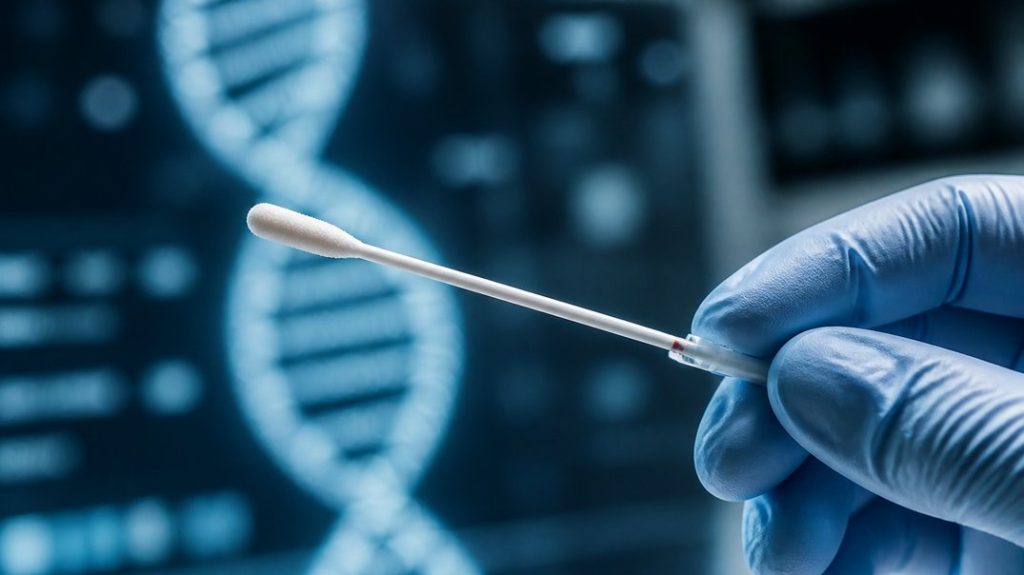
Since morning mood ties back to circadian clock genes, cortisol response, and serotonin and dopamine regulation, a detailed DNA report can offer insight into the variants likely shaping your own daily mood rhythm, which can be a genuinely useful way to understand why mornings feel so different for you than they seem to for other people in your life.

Frequently Asked Questions
Can someone be a “morning person” in terms of sleep but not mood?
Yes, sleep chronotype and morning mood are related but distinct, since they draw on overlapping but not identical biological systems, so someone can naturally wake early and feel alert without necessarily feeling especially upbeat right away.
Why do I feel more irritable in the morning even after a full night’s sleep?
This can be influenced by your individual cortisol awakening response and how your serotonin and dopamine systems fluctuate across the day, both of which have documented genetic and biological variation independent of sleep quality alone.
Does coffee actually help with morning mood or just alertness?
Caffeine primarily affects alertness by blocking adenosine, a chemical that promotes sleepiness, but its stimulating effects can also indirectly improve perceived mood in the short term, separate from its impact on wakefulness itself.
Can morning mood patterns change over time?
Yes, morning mood tendencies can shift with age, life circumstances, and changes in sleep schedule or stress levels, on top of whatever baseline pattern someone’s underlying genetics established.
Should I be concerned if my mood is consistently low every morning?
If low mood is severe, persistent, or paired with other symptoms like sleep disruption or loss of interest in daily activities, it’s worth discussing with a doctor or mental health professional rather than assuming it’s simply a personality trait.
So if you’re wide awake and functional the second your alarm goes off but still somehow radiating storm clouds until you’ve had coffee, that gap between alertness and mood is real, and your genes had a hand in drawing that particular line.