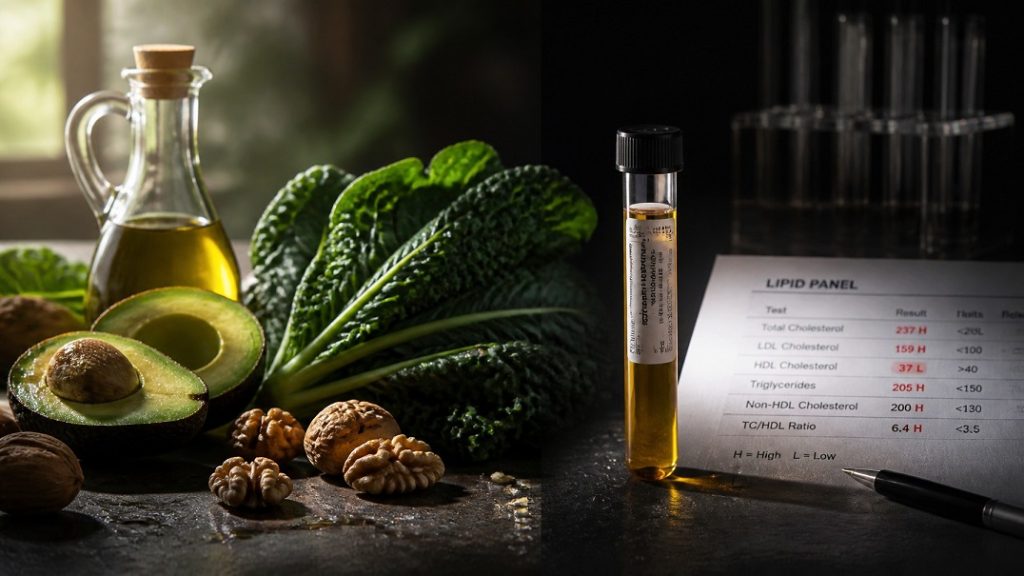
Some people have high cholesterol despite eating well because their bodies make most of their cholesterol, and genes control how well the liver clears it. The best-known cause is familial hypercholesterolemia, an inherited condition that raises LDL cholesterol from birth. In these cases, diet and exercise help but are usually not enough on their own.
Where Does Your Cholesterol Come From?
Most people picture cholesterol as something that comes from food, but your body is the main source. WebMD notes that the liver produces about 75 percent of the cholesterol that circulates in your blood, and research shows that the cholesterol you eat has only a small effect on blood cholesterol for most people. Saturated fat and trans fat are bigger concerns.
That means a perfect diet changes only part of the equation. Your liver’s production and its ability to remove LDL from the blood vary from person to person, and genes help set both.
What Is Familial Hypercholesterolemia?
Familial hypercholesterolemia, or FH, is an inherited disorder that causes very high LDL cholesterol. The same WebMD overview notes that in many cases, high cholesterol stems from a combination of diet and genetics. FH sits at the genetic end of that spectrum.
It is surprisingly common. A Danish study of more than 69,000 people estimated that roughly 1 in 250 people have heterozygous FH, and the CDC cites the same estimate. Many people with FH have no symptoms and do not know they have it until a routine blood test or an early heart problem.
Which Genes Are Behind It?
Researchers have identified three main culprits. Variants in the LDLR, APOB, and PCSK9 genes are the major causes of FH, with LDLR variants the most common. LDLR makes the receptor that pulls LDL cholesterol out of the blood. APOB makes the protein that LDL uses to dock with that receptor, and PCSK9 influences how the receptor is broken down.
When one of these genes does not work properly, the liver clears LDL more slowly, and cholesterol builds up in the blood no matter how many vegetables you eat. In some people, the FH picture is linked to variants in other genes, and the genetics of high cholesterol can also be polygenic, meaning many small variants add up.
Why Does It Matter So Much?
People with FH have high LDL cholesterol from birth, and the CDC notes that this increases the likelihood of heart attacks and heart disease at a younger age. The cumulative effect of years of elevated LDL is what drives the risk. Finding FH early gives people more time to protect their hearts.
The same CDC page says that diet and exercise alone are not sufficient to reduce cholesterol in most people with FH, and that diagnosis can lead to more aggressive treatment, such as high-intensity statins or PCSK9 inhibitors.
What Else Can Raise Cholesterol Despite a Good Diet?
Genetics is not the only possibility. Underactive thyroid, kidney or liver disease, and certain medications can all raise cholesterol. If your numbers are high despite healthy habits, your doctor can check for these causes, because treating them can bring your cholesterol down.
What Should You Do If This Sounds Like You?
Start with the numbers and the family tree. Ask relatives whether anyone had very high cholesterol or a heart attack at a young age, and tell your doctor. A lipid panel measures your LDL, and a doctor can decide whether further testing or genetic screening makes sense. Because FH runs in families, relatives of a person with FH are often advised to be tested too.
Keep eating well. A heart-healthy diet, regular activity, not smoking, and a healthy weight still lower your overall risk, even if they do not fully normalize your LDL. Think of them as the foundation, with medication as an addition when your doctor recommends it. Never start or stop a cholesterol medication without medical guidance.
Curious About Your Own Wiring?
A DNA report cannot diagnose a cholesterol disorder, and a blood test is the only way to know your numbers, but it can help you explore how your genes relate to broader traits, such as metabolism. SelfDecode turns your DNA data into personalized health recommendations, a handy starting point if you are curious. You might also enjoy our post on why the same diet works great for your friend and does nothing for you.