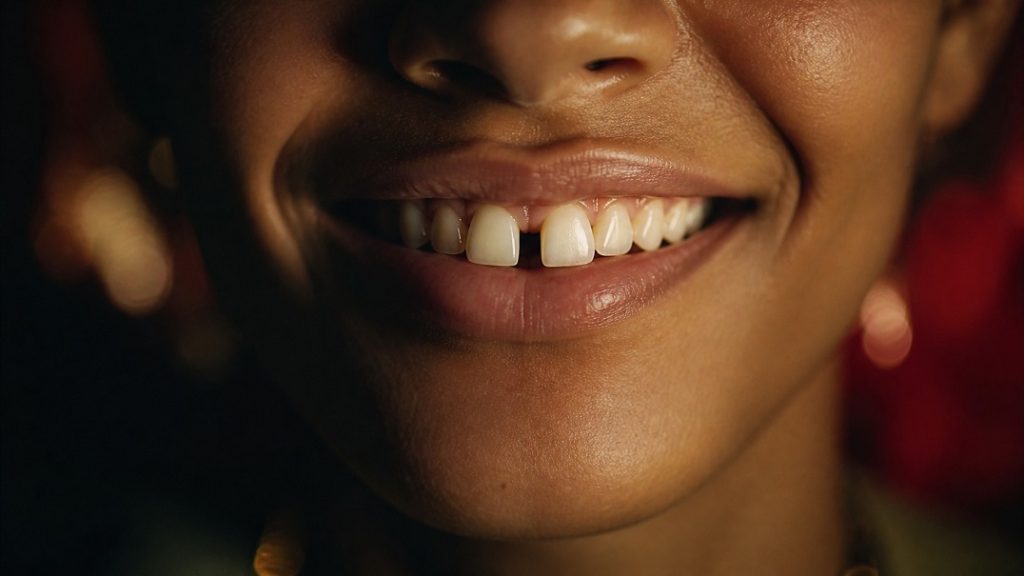
Some people have a gap between their front teeth because their teeth are small relative to their jaw, and both traits are strongly inherited. The gap, called a diastema, can also come from a large tissue band under the upper lip, missing or small neighboring teeth, or habits such as tongue thrusting. It is common, usually harmless, and often a family trait.
What Is a Diastema?
Diastema is the clinical term for a gap between teeth. According to Cleveland Clinic, gaps can develop anywhere in your mouth, but a diastema is most common between your two front teeth, and having one does not often have a negative impact on your oral health. A diastema between the upper front teeth is called a midline diastema.
In children, gaps are especially normal. Baby teeth and growing jaws leave space that often closes as permanent teeth come in.
How Does Tooth Size Versus Jaw Size Create a Gap?
This is the most common explanation. Colgate’s dental guidance notes that sometimes a mismatch between the size of the jawbones and the size of the teeth causes extra space between teeth. If your jaw is wide and your teeth are narrow, there is simply more room than teeth to fill it.
Teeth that are small or missing can have the same effect. Colgate adds that undersized upper lateral incisors, the teeth next to the two front teeth, are a typical culprit, because the front teeth then have room to drift apart.
What Does the Labial Frenum Have to Do With It?
The labial frenum is the small fold of tissue that connects your upper lip to your gum. In some people it is large and continues to grow down between the two front teeth. The same source explains that this can sometimes pass between the two front teeth and, over time, help create a space. If the frenum is the cause, a small procedure can sometimes help, often combined with orthodontic care.
Is a Gap Between Your Front Teeth Genetic?
Largely, yes, because the traits that create it are inherited. Twin research from the Adelaide Dental School found that estimates of heritability for the size of baby tooth crowns ranged from 0.62 to 0.91, indicating a strong genetic component. A separate twin study found that dental arch breadth had heritability estimates of 0.49 to 0.92 and arch length 0.86 to 0.94, a high genetic contribution to the shape of the dental arches.
In plain terms, tooth size and jaw shape can be inherited independently. A child who gets small teeth from one parent and a roomy jaw from the other may end up with spaces, even if neither parent has a gap. No single gene has been identified for diastema, and the gap likely reflects many small influences.
Do Habits Make a Difference?
They can. Thumb or lip sucking and tongue thrusting, which is pressing the tongue forward against the teeth when swallowing, can push the front teeth outward and open a gap over time. Gum disease is another cause in adults, since infection can erode the bone that holds teeth in place.
That last point is the important one. If your gap is getting wider, Cleveland Clinic advises calling your dentist, because it could be due to gum disease. Watch for red, swollen, or bleeding gums and loose teeth.
Will a Gap Close on Its Own?
In children, often. In adults, rarely. Cleveland Clinic says that when the gap is between permanent teeth, it is less common for a diastema to go away on its own. Options for closing it include bonding, veneers, and braces or aligners, depending on the cause.
You are also free to keep it. In many cultures, a gap between the front teeth is considered a mark of beauty, and plenty of people have built a signature smile around theirs.
When Should You See a Dentist?
Book a visit if the gap is widening, if teeth feel loose, or if you have bleeding or swollen gums. Mention it too if a child still has a wide gap after the permanent front teeth have come in.
Curious About Your Own Wiring?
A DNA report cannot predict whether you or your children will have a gap, but it can help you explore how your genes relate to broader traits, such as bone and tooth development. SelfDecode turns your DNA data into personalized health recommendations, a handy starting point if you are curious. You might also enjoy our post on the genetics of dimples.