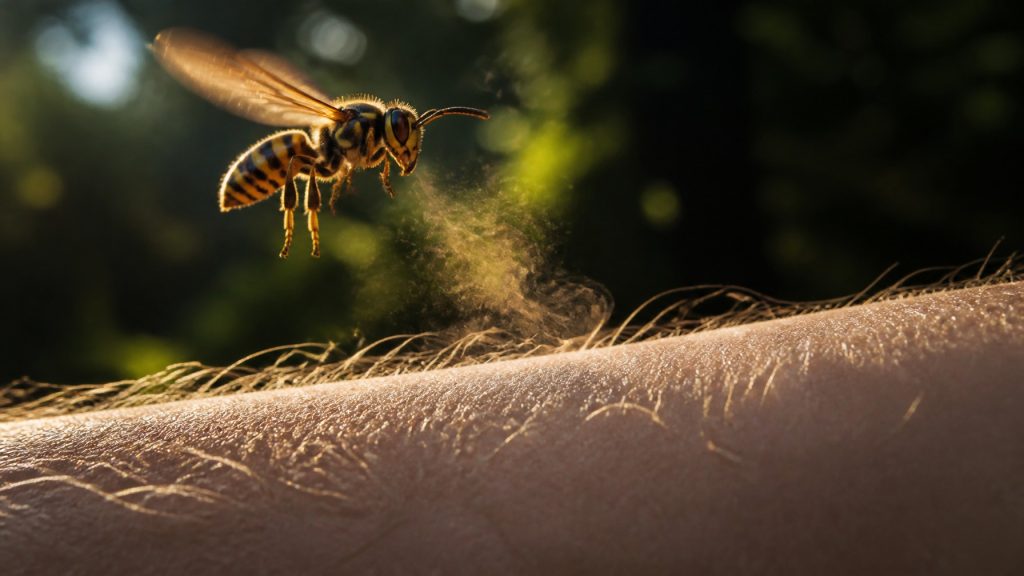
Bees, wasps, and ticks respond to cues such as scent, heat, breath, sweat, color, and movement, and people differ in how much of each they give off. Genes may play an indirect part by shaping body odor and skin traits. Twin research on mosquitoes supports that idea, but no one has shown it yet for bees, wasps, or ticks.
What Draws Bees and Wasps to You?
Bees and wasps are looking for food, flowers, and safety, and you can accidentally look like all three. Health guidance lists several things that attract them: perfumes, scented soaps, suntan lotion, bright colors, flowered prints, and rough-textured fabrics such as wool. Sweet drinks and ripe fruit are also big draws, which is why a soda can at a picnic often gets a visitor.
Being a “magnet” often comes down to a few habits stacked together. Floral shampoo, a bright shirt, and a sugary drink send a very flower-and-nectar message.
Why Do Insects Sting?
Most stings are defensive. The same guidance warns that bees are more likely to attack when they feel threatened, which is why swatting or running often backfires. If a bee or wasp lands on you, calm and slow movements work better. Accidentally disturbing a nest, such as while mowing or trimming a hedge, can provoke stings no matter how you smell.
How Do Ticks Find You?
Ticks hunt very differently. They rely on a sensory structure on their front legs called Haller’s organ, which detects odors, carbon dioxide, and heat. In lab tests, two common tick species could locate a human from several meters away using radiant heat alone. Ticks do not jump or fly. They wait on grass and brush with their legs outstretched, then climb aboard when something warm and breathing brushes past.
People who run warm or spend time in tall grass and woods may simply give ticks more opportunities. Ticks are second only to mosquitoes as carriers of disease, so it pays to check yourself after time outdoors.

Where Could Genes Come In?
The best genetic evidence comes from mosquitoes, not bees or ticks. A twin study found that identical twins were far more alike in how attractive they were to mosquitoes than non-identical twins, with a heritability estimate of 0.62 for relative attraction. The authors noted that body odor can be controlled genetically, and the insects detect those chemical differences through smell.
It is reasonable to suspect that similar mechanisms could matter for other bugs, since your DNA can influence how much you sweat and how your skin smells. That remains a hypothesis, though. It is worth saying plainly that genes are likely only one ingredient, with scented products, clothing, and your hobbies often mattering more. We have a full post on the genetics of mosquito attraction if you want the deeper dive.
What Can You Do to Be Less Appealing?
You can tilt the odds without giving up your favorite summer activities. Skip heavily scented products before heading outdoors, choose lighter and plain-colored clothing, and keep sweet drinks covered. For ticks, wear long pants, tuck them into your socks, and do a full body check when you come inside. Pay special attention to warm, hidden spots such as the scalp, armpits, groin, and backs of the knees, where ticks often attach. A shower soon after coming indoors makes the check easier.
Repellent helps with some pests but not others. Insect repellents, including those with DEET, have no effect on bees, hornets, or wasps. If you are allergic to stings, talk with your doctor about carrying epinephrine, since the same source notes that stings can be fatal to severely allergic people.
Curious About Your Own Wiring?
A DNA report cannot tell you whether a wasp will crash your picnic, but it can help you explore how your genes relate to broader traits, such as skin and stress response. SelfDecode turns your DNA data into personalized health recommendations, a handy starting point if you are curious. Until then, a plain white shirt and a lidded cup are a surprisingly good defense.